
Oregon AFSCME members celebrate a long history of union PRIDE!

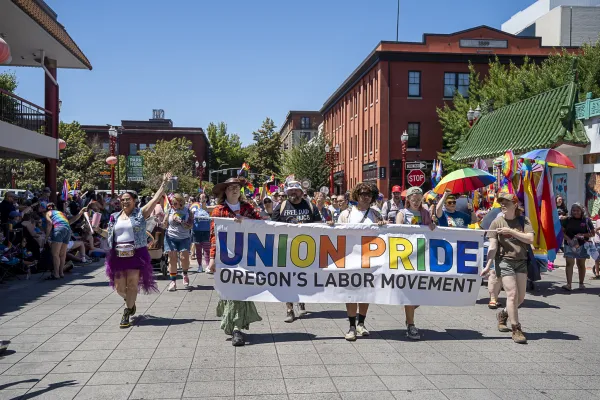
On Sunday, July 19, Oregon AFSCME members joined the Oregon Labor Pride Coalition – a group of over a dozen unions, including SEIU, OEA, ONA, Screen Actors Guild–American Federation of Television and Radio Artist (SAG-AFTRA), and National Association of Letter Carriers (NALC) – in celebration of the work that unions have done to protect and uplift queer workers, and to renew their commitment to the fight.
For the last several years, the Portland Pride Parade has been a place for union workers to march together in solidarity with the LGBTQIA+ community, but labor organizations have a much deeper history with the fight for equity among workers. Long before marriage equality or federal employment protections existed, unions were already building safeguards for queer workers, often decades ahead of the law.
Early Solidarity After Stonewall
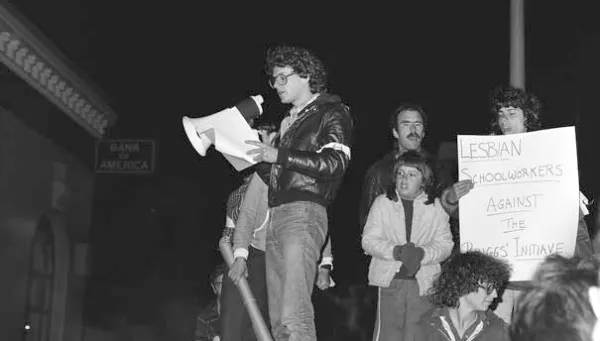
After the Stonewall Uprising in 1969, The American Federation of Teachers (AFT) became the first union to pass a resolution opposing discrimination based on sexual orientation, signaling a shift in labor's attitudes toward queer members. In 1974, San Francisco's gay community partnered with the Teamsters on a boycott of non-union Coors Brewing Company, a campaign that grew into a national effort and ultimately forced Coors to abandon discriminatory practices against both union supporters and LGBTQIA+ people.1 By 1979, the AFL-CIO called for federal legislation banning workplace discrimination based on sexual orientation.
Fighting for Queer Rights Contract by Contract
Where lawmakers failed to act, unions turned to collective bargaining. The Amalgamated Clothing and Textile Workers Union negotiated some of the earliest known contract protections for transgender workers, adding "change of sex" nondiscrimination language in New Jersey in the early 1980s after a member faced harassment following gender-affirmation surgery.
The practice of adding protections directly into contracts scaled up dramatically in the following decades. By the 2010s, more than 1,700 AFSCME contracts included sexual orientation in their nondiscrimination clauses, with a growing number also covering gender identity. What began as a largely symbolic position in the early 1980s evolved into standard practice, along with the increase of domestic-partnership benefits for same-sex couples.
Protections That Still Outpace the Law
These gains in union contracts matter because federal law has never fully caught up. For nearly 40 years, union contracts have offered discrimination protections that, in many states, remain the only legally enforceable safeguard available to LGBTQIA+ workers. Even in 2026, a union contract can be the sole source of protection from workplace discrimination for queer employees in dozens of states.
Continuing the Fight
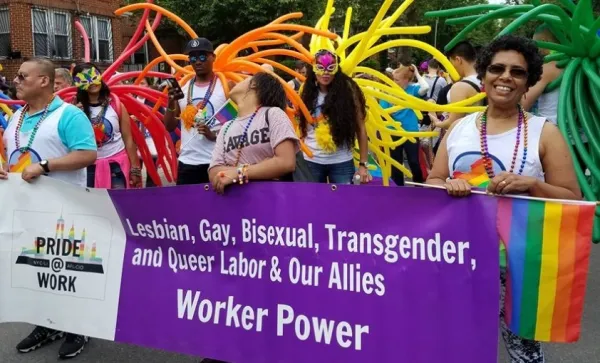
That collective action hasn't stopped. Around the 50th anniversary of Stonewall, LGBTQIA+ workers from two dozen unions gathered in Portland to draft model contract language, including a proposed transgender bill of rights. Groups like Pride at Work continue pushing unions to bargain over gender-neutral contract language, harassment protections, and support for younger, queer workers entering the labor force.
After nearly 60 years, unions have proven that when courts and Congress have been slow to act, organized labor has been ready to step in to bargain queer workers' rights into enforceable reality. AFSCME has been a pioneer in setting the standard for equitable contract language for LGBTQIA+ workers, and our members are proud to carry the torch for future generations.
Sources - Read more about queer union history!
- LGBTQ Rights | Unions Making History in America
- Queer Working-Class Politics and the U.S. Labor Movement, New Labor Forum
- Janus Amicus Demonstrates That Unions Protect LGBT Workers, OnLabor
- LGBT Workers Need Unions, Not Rainbow Capitalism, In These Times
- How the Labor Movement and the Gay Rights Movement Work Together, Pacific Standard
- Fifty Years after Stonewall: LGBTQ Workers Seek Equality, Labor Notes